

When it comes to ads, engagement and persuasion sound like they could go hand in hand. An ad that reaches millions of impressions is doing something valuable, but it's critical to clarify that engagement and persuasion are distinct tactics, often occurring over different timescales.
In a 2025 survey of social media marketers, engagement, reach, and follower growth were far more common priorities than conversion rates or cost per acquisition, in part because those engagement numbers are available on every platform by default (Ignite Social Media, 2025 Social Media Trends Survey). But a like or a share only tells you an ad got a reaction, not whether it changed anyone's mind.
Engagement metrics, which are easier to track by default, are not a validated proxy for persuasion. They measure a reaction, whereas persuasion measures a shift in belief. This comparison is not "apples-to-apples" but a compelling dynamic to pay attention to. For example, an effective strategy to mobilize clean energy advocates to sign a petition is inherently different from an approach aimed at persuading a hard-to-influence audience. Both engagement and persuasion are worthwhile goals, but they require different strategies.
When the Climate Advocacy Lab which equips climate and clean energy advocates with insights and training to advance climate justice, and Energy Foundation brought Grow Progress a set of clean energy ads that had performed well on engagement, we tested a different question: do the ads getting the most engagement also persuade?
Why This Matters
What we found is that engagement is a valuable goal, but should not be used as a proxy for persuasion. For an ad to persuade, it first has to be seen and absorbed—often multiple times over a period of time— to shift what someone believes. Engagement tells you that you've caught someone's attention enough to evoke a reaction. It doesn't tell you the message landed, and it definitely doesn't tell you anyone's mind has changed. So if your ad goal is to persuade, you need to have a different strategy to maximize your ad dollars.
How We Tested It
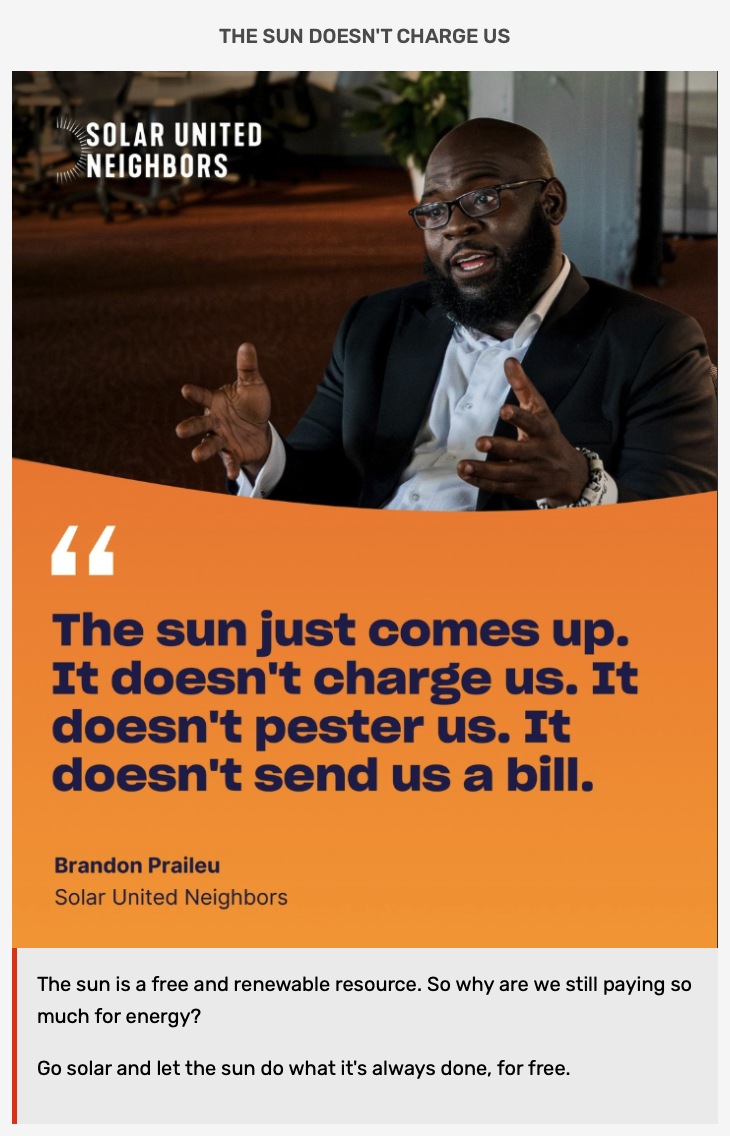
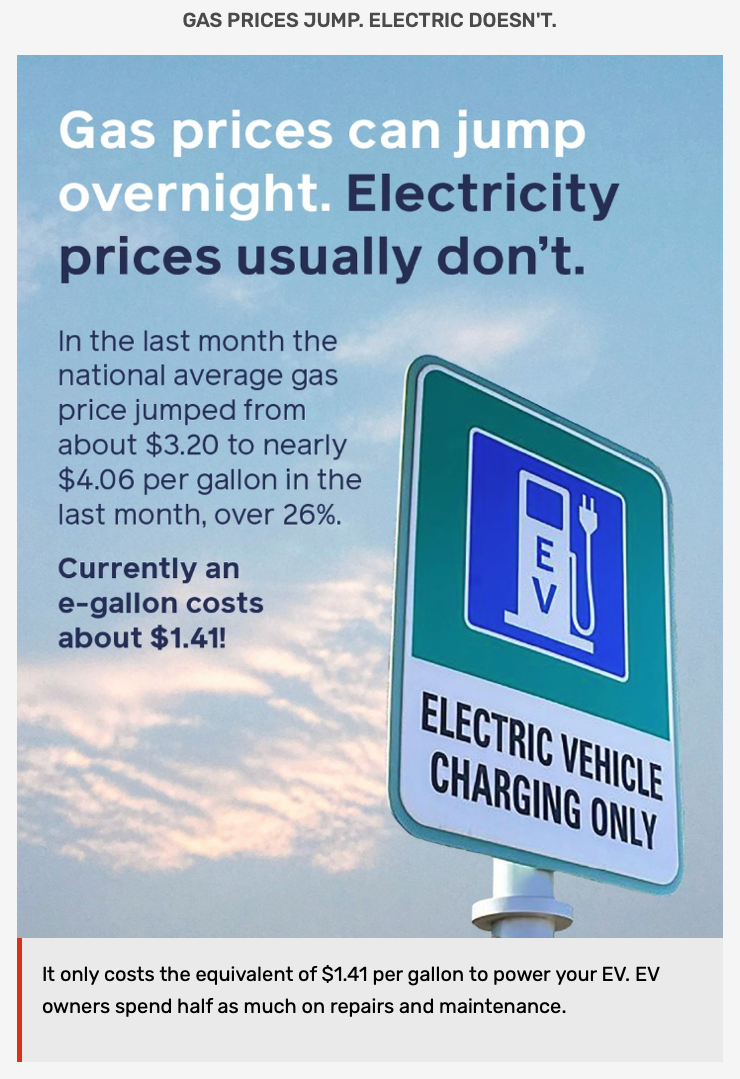
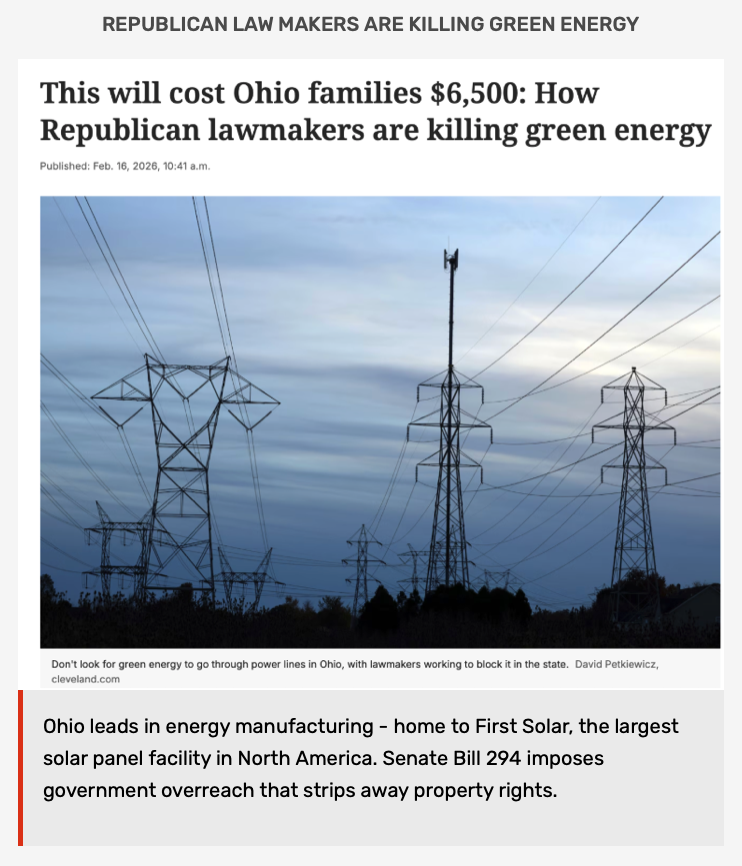
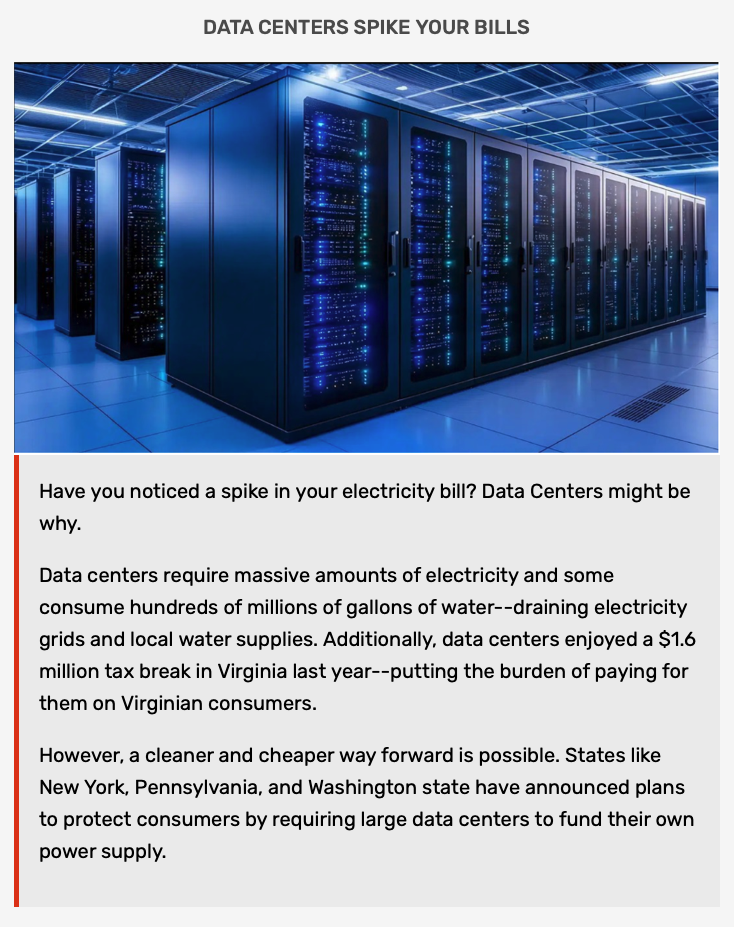
We took four clean energy ads with the highest engagement from the Climate Advocacy Lab's ad database. These ads focused on 2026 clean energy, utility, and data center accountability and were run through a Rapid Message Test. Roughly 1,200 respondents per ad were randomly assigned to see one of the ads or placebo content. Then, we measured the differences between the groups across three distinct statements regarding the benefits of clean energy:
- it keeps energy costs down (affordability)
- it benefits the respondent and their family (personal benefit)
- it benefits their community
What the Data Showed
The ad that showed the most potential to move people is the one that most focused on the positive aspects of renewable energy, communicating the simple idea that the sun doesn't send you a bill. People who saw this ad showed the highest potential to positively shift their opinion that clean energy can keep energy costs down and personally benefit the respondent and their family.
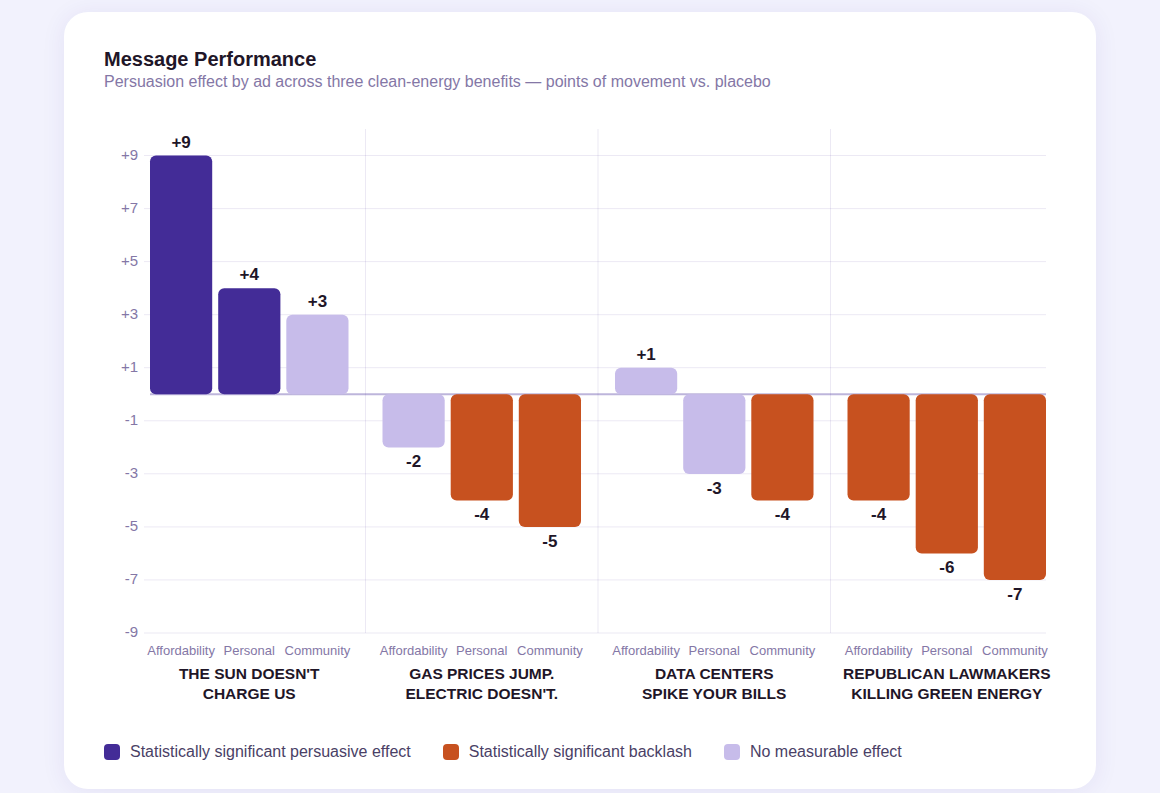
The other three ads ranged from no measurable movement to clear backlash. There could be a number of factors contributing to the lack of movement, but one theme among the three ads was focusing on the problem or the use of a blame tone. This was especially true for the ad that attributed rising costs to Republican lawmakers, which had the highest backlash. At the same time, this single test isn't pointing to the fact that centering the problem and blame doesn't have persuasion potential. In fact, strategies like naming the villain have proven to be a very effective persuasion mechanism. Instead, this test suggests that testing pre-creative can be an informative way to experiment and refine your content strategies to reach your target audience and persuasion goals.
The gap widened by subgroup. The leading ad did its strongest work on the audiences hardest to move, with the largest positive shifts among people who started with low clean-energy support and among conservatives. The backlash was just as concentrated, with backlash highest among older, white, lower-education, moderate, and lower-turnout respondents.
| Women | 55+ | White | Low Education | Moderate | Low voter turnout | |
|---|---|---|---|---|---|---|
| Affordability | -8 | – | – | – | -5 | -7 |
| Personal benefit | -8 | -5 | -5 | -6 | -6 | -7 |
| Community benefit | -8 | -8 | -6 | -6 | -7 | -7 |
Persuasion results for the "Republican Lawmakers" ad, segmented by political affiliation.
What This Means
When it comes to clean energy, this experiment suggests that tone is a significant factor in persuading people. The aspirational, positive ad about the sun aligns with other ad research showing that showing a person sharing their own positive experiences with clean energy is most effective in persuasion. This test suggests that focusing on the problem and using blame, on the other hand, needs to be used more strategically when it comes to persuasion. Ads that use blame can perhaps be persuasive if, for example, it is targeted to hold specific audiences like decision makers accountable, or when used to persuade people to vote for a specific ballot measure.
Engagement and persuasion measure different things. Likes, shares, and clicks tell you an ad got a reaction. Persuasion tells you it changed what someone believes. Both matter, but neither is a proxy for the other, and the only way to know whether an ad persuades is to set up different mechanisms to measure it. In other tests we've seen the same gap: the creative that rises to the top on engagement often isn't the one that changes minds.
If you want to persuade, the practical move is to put persuasion testing in front of your ad dollars:
- Before you create: test message and creative concepts first, then build ads around what actually moves people.
- Before you scale: screen your high-engagement creative for persuasion before the big spend, so budget goes to ads that change minds, not just ones that get clicks.