
The gap between what got seen and what worked
If you put content in a social feed, there are two things you want to know: whether anyone actually watched it, and whether it changed anything. You already have two sets of numbers, and neither one covers both.
Platform analytics tell you what got seen. Views, watch time, completion rate — all of it available after you post, all of it about your content in isolation. What they cannot tell you is whether anyone thought differently afterward. We have written about this before: a like is a reaction, not a shift in belief, and high engagement is a poor proxy for persuasion.
Message testing answers the second question, and answers it well. A Rapid Message Test asks a precise question: if this content reaches someone, does it move them? To answer it cleanly, the test makes sure it reaches them. Everyone in the test sees the content, so any difference we measure is about the content and nothing else. That is the right design for that question, and it is why message testing works.
But in a feed, reaching someone is the hard part. Content that gets quietly scrolled past doesn't persuade anyone, and whether a person keeps watching is part of what you're testing. So teams end up choosing between two half-answers: what got seen, or what worked on the people who saw all of it.
Introducing In-Scroll Testing
In-Scroll Testing puts your content inside a TikTok/Reels-like feed that respondents scroll on their phones, at their own pace. The feed is full of other high-performing posts — either content we source or content you send us — and your content sits at set positions within that experience. Respondents have to keep scrolling for at least two minutes before they can move on. What they do in those two minutes is the measurement.
We record which seconds of each post were actually on screen. That gives us three things:
- Dwell time — how long someone spent with a given piece of content.
- A retention curve — showing the share of people still watching at every second.
- Feed depth — how far down the scroll each person got before they stopped.
None of that would mean much without a control group. A second set of respondents scroll the same feed, but in the slots where your content would be, they see stand-in posts of the same length. Everything else about their experience is the same. So when we report that your content held attention, we're measuring it against a like-for-like baseline.
And because all of this sits inside a Rapid Message Test, the persuasion measurement works the way it always has. Respondents answer the same outcome questions, and we can tell you whether the content moved them.
What we're seeing so far
Attention drops fast. In a feed, most of the audience for any given piece of content is gone within the first few seconds. That's normal, and it happens to the high-performing posts around yours too. What's new is that we can report on it second by second: how many people stayed, how long they stayed, and where your content lost them. That's the actionable part, because it tells you which stretch of a video was doing the work and where to cut.
It also gives you something platform analytics can't. Your content is read against stand-in posts of the same length, curated from content that already performs well, shown to a comparable audience in the same feed. So you aren't comparing this post to your own last post, or to a platform average. You're comparing it to other strong content competing for the same attention.
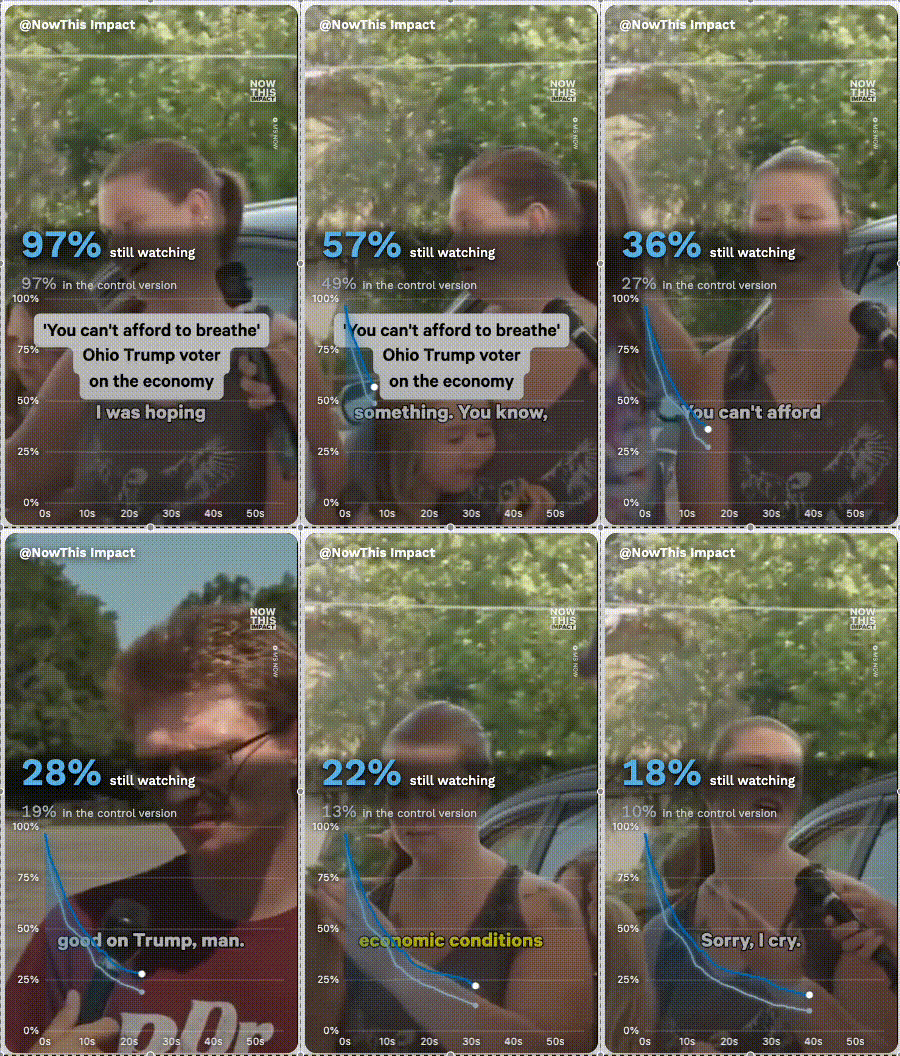
Attention and persuasion are different questions. It's tempting to treat a long dwell time as evidence that content worked, and we'd caution against it. Earlier this year we tested four clean energy ads that had all performed well on engagement. They diverged sharply on persuasion, and one of them produced backlash. Attention tells you whether your content got a hearing. It doesn't tell you what happened during the hearing. Both measurements sit in the same test, so you can see where they line up and where they pull apart.
Where this fits
In-Scroll Testing is the newest addition to our suite of attention-testing tools, all built around one idea: content behaves differently depending on where it shows up.
A standard Rapid Message Test asks whether an argument works at all, and that question comes first. There's little point measuring whether a video holds attention if the case it makes doesn't land. Clutter testing puts a message inside a realistic media environment, to see whether it still persuades with other content competing around it. It's the better fit for TV and streaming buys, where your spot runs in a break and the audience isn't choosing what comes next. Breakthrough testing goes a step further and measures how much of a message's effect survives the move from isolation into that clutter.
Skippable video testing looks at what happens when someone can skip after a few seconds, as on YouTube — its own kind of attention question with its own kind of decision behind it.
In-Scroll Testing sits along that progression. It hands the respondent control of the whole experience: what to watch, how long to watch it, when to move on, and how far to keep going. That's the least controlled environment we test in, and the closest to how a feed actually works.
When to reach for it
You're deciding which content or creators to invest in. Engagement numbers are the usual basis for that call, and they tell you what got seen rather than what worked. In-Scroll gives you both, so the decision rests on more than view counts.
You're about to put money behind a post. Boosting is how you reach a specific audience on purpose rather than leaving it to the algorithm, which makes it a real budget decision. Test the content with the audience you plan to boost to before you spend, and you'll know whether it holds attention in a competitive feed and whether it moves them.
You're editing feed-native video and don't know where to cut. Seeing where people dropped off is a direct input into the edit, and into the notes you give a creator before their next script.